In the Westminster Leningrad Codex, Hosea 2 is written as a covenant lawsuit. The chapter uses the imagery of a husband confronting an unfaithful wife, but the focus is not primarily on marriage. The marriage serves as a picture of a broken relationship between people and the system of values that originally sustained them.
The chapter opens with conflict. The children are told to “plead” with their mother because she has abandoned the covenant. Israel has begun attributing its prosperity, food, water, clothing, and security to other sources rather than recognizing where those blessings actually came from.
One of the major themes is misplaced attribution.
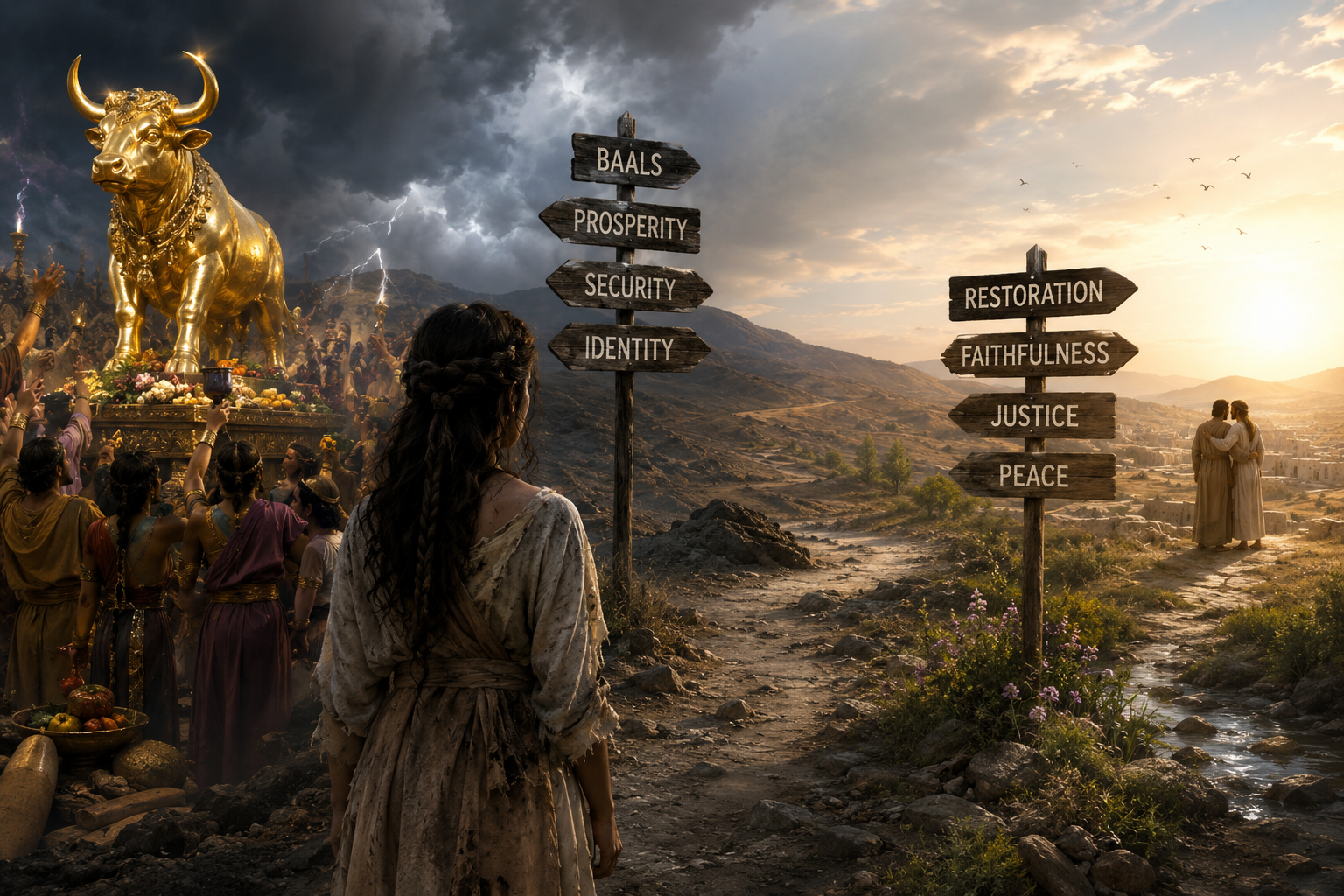
The people believe their prosperity comes from the Baals, the local fertility gods. In practical terms, they are trusting alternative systems for security, prosperity, and identity. The text repeatedly says they forgot the true source of what sustained them.
From a systems perspective:
People often become loyal to whatever appears to be producing results.
When prosperity arrives, it becomes easy to credit the visible mechanism instead of the deeper source behind it.
The chapter then describes a form of intervention. God blocks paths, removes prosperity, and allows consequences to unfold. The purpose is not destruction for its own sake. The stated goal is restoration. The disruptions are intended to expose dependencies that have become unhealthy.
A recurring pattern appears throughout history:
When individuals, organizations, or nations become dependent on systems that cannot ultimately sustain them, reality eventually reveals the weakness of those systems.
The most surprising turn comes in the middle of the chapter.
After judgment, the language suddenly changes from accusation to restoration. The wilderness, normally associated with hardship, becomes a place of renewal. The relationship is rebuilt rather than abandoned.
The chapter moves from:
- accusation → reflection
- consequence → awareness
- separation → reconciliation
The closing verses describe a future covenant characterized by peace, faithfulness, justice, compassion, and security. Weapons disappear. Fear diminishes. The relationship is restored on healthier foundations.
Hosea 2 is not primarily about marriage failure.
It is about what happens when people forget the sources of their stability, place trust in systems that cannot ultimately deliver what they promise, and then face the consequences of that misplaced trust.
The chapter argues that correction is not always punishment.
Sometimes disruption is an attempt to restore clarity.
Sometimes losing what we depend on reveals what we actually trust.
And sometimes the wilderness becomes the place where a broken relationship, a broken institution, or a broken society begins to heal again.
Hosea 2.