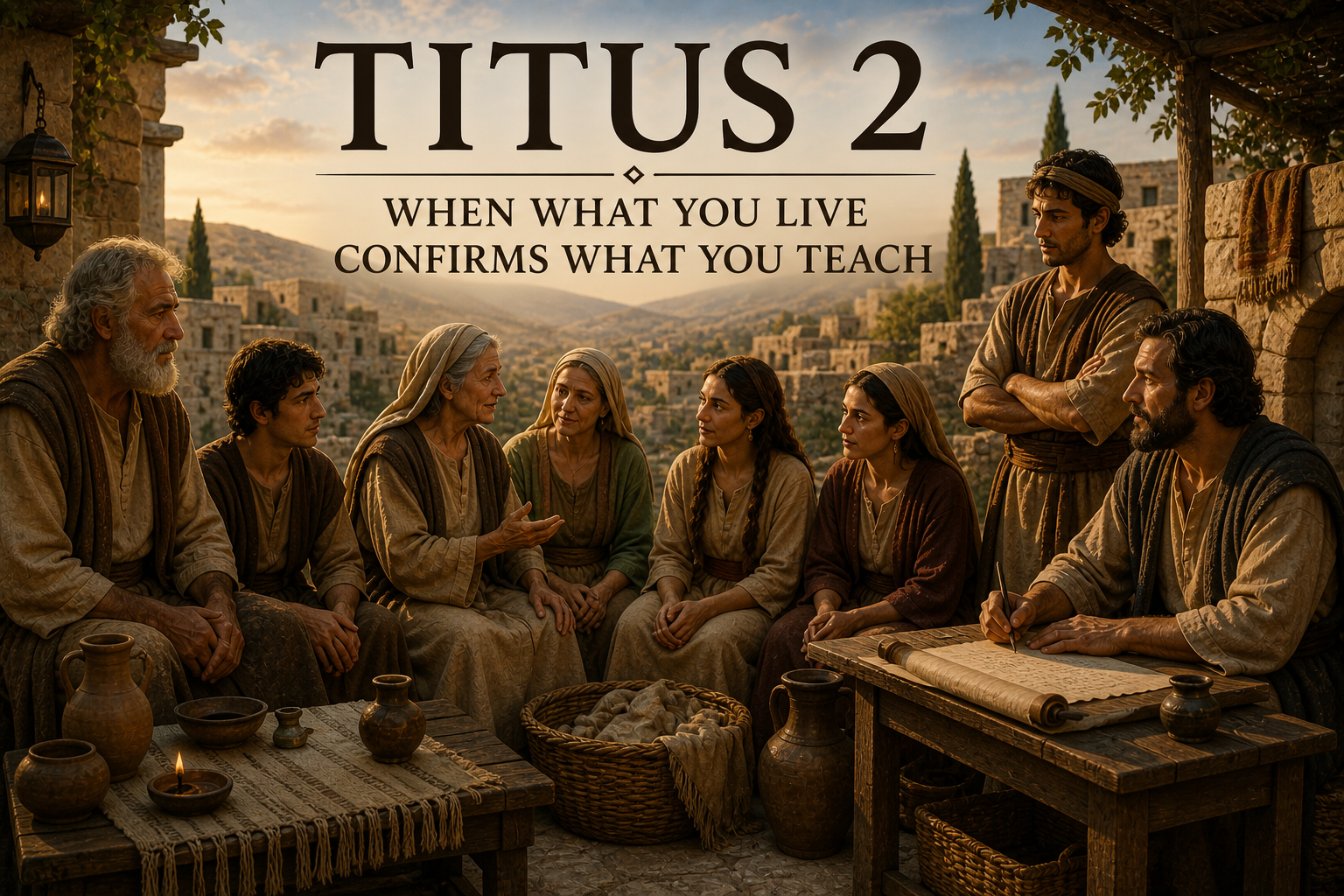
Titus 2 shifts the focus from leadership to everyday behavior. The emphasis is on teaching what is sound and reliable, not as theory, but as something that produces clarity and stability in real life. The goal is practical. What is taught should be visible in how people actually live.
Paul then applies this to different groups. Older men are encouraged to be steady, clear-headed, and self-controlled. Their lives should reflect consistency in trust, love, and endurance. The focus is not on intensity, but on long-term stability.
Older women are called to the same kind of integrity. Their behavior should reflect discipline and respect, and they are to pass that on by teaching what is good. This creates a pattern where maturity is shared through both example and instruction, especially with younger women.
Younger women are encouraged toward balance in their relationships, responsibility in daily life, and self-control. The emphasis is on order and consistency, so that their lives reflect well on what they represent. This is not about appearance, but about alignment between what is believed and how one lives.
Younger men are addressed more briefly, but the instruction is direct. They are to practice self-control. Titus himself is told to model this in every area. His teaching should be marked by integrity, clarity, and seriousness, leaving no room for valid criticism.
Those in positions of service are also included. They are encouraged to act with respect, reliability, and honesty. The instruction is practical and specific. Their behavior should demonstrate trustworthiness, reinforcing the credibility of what they represent.
The foundation for all of this is then made clear. What has been given is not passive. It actively shapes and trains people to move away from destructive patterns and toward a disciplined, balanced way of living. This process is ongoing and intentional.
This way of life is lived in the present, with a clear sense of direction. The focus is not on abstract ideas, but on consistent alignment now. The aim is to form people who are committed to what is good in practice, not just in theory.
Paul closes by reinforcing Titus’s role. He is to teach with clarity and confidence, encouraging where needed and correcting when necessary. This instruction carries weight because it is grounded in what can be seen and lived out.
At its core, Titus 2 emphasizes consistency between teaching and behavior. It shows that clarity, discipline, and integrity are not separate from belief. They are the evidence of it.