Nothing terrifies a powerful system more than people who stop believing the walls are permanent.
Joshua 6 sounds insane on purpose.
A fortified city stands ahead.
Massive walls. Military advantage. Psychological dominance.
And God’s battle plan is basically:
“Walk around it quietly for a week.”
No ladders.
No siege engines.
No inspirational TED Talk from Joshua.
Just silence, trumpets, repetition, and obedience that probably looked ridiculous from Jericho’s walls.
That’s what makes the chapter powerful.
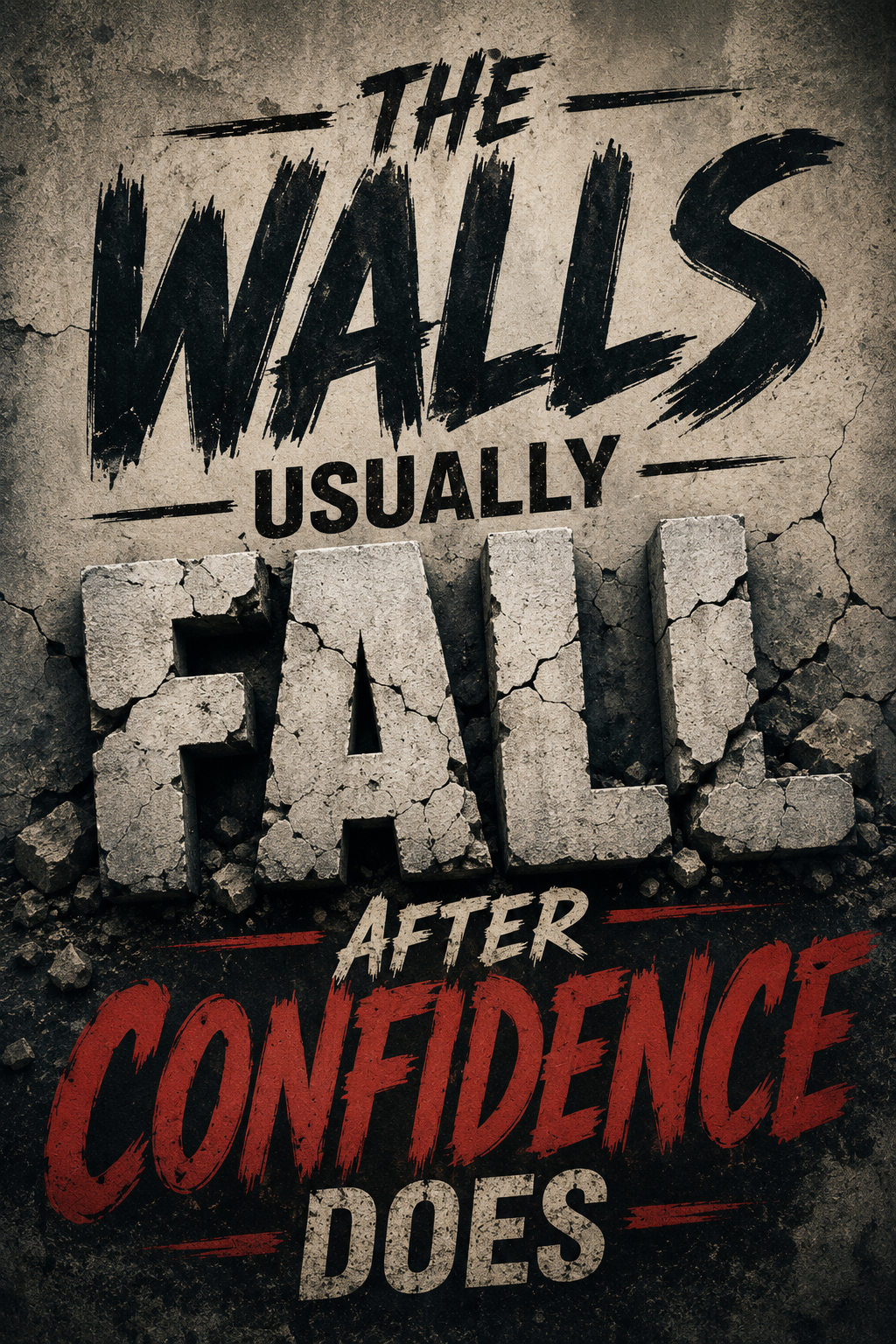
Joshua 6 is not really about the architecture collapsing.
It’s about confidence collapsing.
The city is already afraid before the walls fall.
The text says Jericho was “shut up tightly.”
That pattern repeats constantly in history.
Systems usually crack internally before they collapse externally.
The Soviet Union looked immovable until suddenly it wasn’t.
The Berlin Wall stood physically after belief in the system was already dying.
Major banks can appear stable right up until the panic starts trending.
Modern societies still worship walls:
financial walls,
technological walls,
political walls,
military walls,
institutional walls,
algorithmic walls.
But every civilization eventually discovers the same uncomfortable truth:
Walls are psychological first.
Joshua 6 also exposes something modern culture struggles with badly:
The inability to stay quiet.
Israel is commanded to march silently for days.
No reaction cycles.
No outrage performance.
No constant emotional broadcasting.
That alone feels almost impossible now.
We live in an age where everybody feels pressured to comment instantly on everything:
wars,
elections,
controversies,
viral clips,
breaking news,
half-verified rumors.
Joshua 6 presents a completely different rhythm:
Discipline before eruption.
The people hold formation before the breakthrough ever comes.
Then the shofars sound.
The Hebrew structure keeps repeating the number seven:
seven priests,
seven trumpets,
seven days.
In Hebrew thought, seven signals completion and covenant order.
Meaning this battle is framed less like military conquest and more like a collision between human systems and divine order.
That detail matters.
Because civilizations often become most fragile when they start believing their own permanence.
Rome believed it.
Babylon believed it.
Financial empires believed it.
Tech monopolies believe it now.
Then one day, the wall everyone trusted suddenly looks very temporary.
And then there’s Rahab.
A woman inside the doomed city survives because she recognized reality before the system around her did.
That pattern repeats constantly, too.
The people who survive a collapse earliest are usually the ones willing to admit the system is unstable before everyone else does.
Joshua 6 leaves you with an uncomfortable question modern societies hate asking:
What walls are we trusting right now
that are already weaker than they look?