The wilderness was not Israel’s biggest problem.
Fear was.
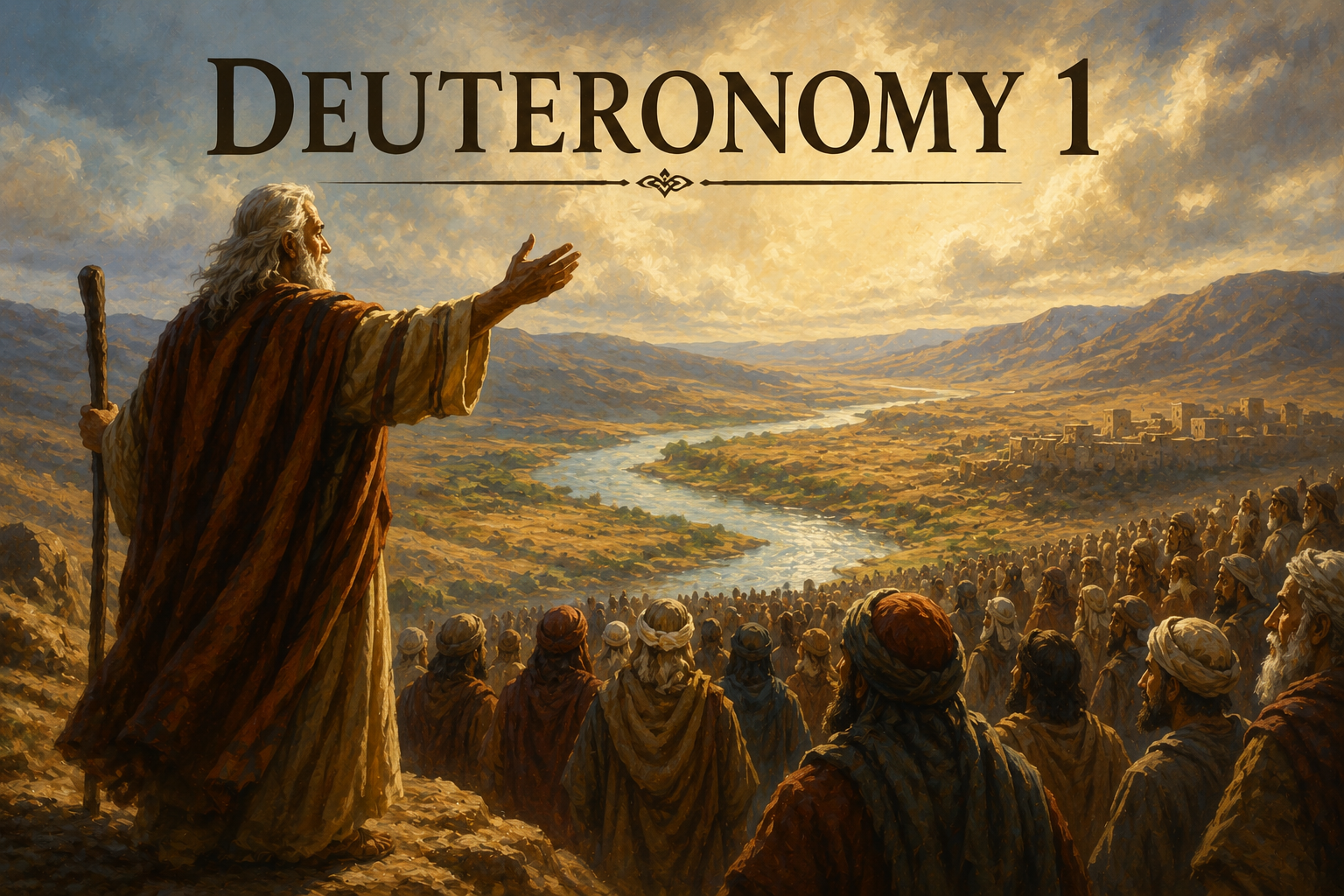
Deuteronomy 1 opens with Moses speaking to a generation standing at the edge of the land their parents never entered. The chapter is not simply history. It is a postmortem. Moses is forcing the people to confront how an entire nation delayed its future for forty years.
The Westminster Leningrad Codex places these words east of the Jordan, just before the transition. Israel is finally near the destination, but Moses begins by looking backward instead of forward.
That choice matters.
Before movement comes reflection.
Moses first recalls how rapidly the people multiplied after leaving Egypt. The nation became too large for one person to manage alone, so leaders, judges, and officers were appointed across the tribes. The structure was necessary because freedom without order eventually collapses into confusion.
But leadership is not the chapter’s real focus.
Kadesh-barnea is.
That was the turning point.
Israel arrived at the edge of the land and was told:
“Go up and possess it.”
The instruction was already clear. The land was already in front of them. The real battle began internally before it ever became external.
The people asked for spies to scout the land first. Strategically, the request sounded reasonable. But once the spies returned, fear spread faster than trust. The land was good, yet the people became consumed by fortified cities, powerful nations, and worst-case scenarios.
Then the rebellion moved inward.
The text says they “murmured in their tents.”
That detail is easy to overlook.
Collapse usually begins privately before it becomes public. Fear grows quietly through repeated conversations, distorted assumptions, and internal narratives people keep feeding.
Then comes one of the most revealing lines in the chapter:
“Because YHWH hated us, He brought us out…”
That statement exposes how deeply fear had altered perception. The same people rescued from slavery now reinterpret deliverance itself as hidden hostility.
Fear reshapes memory.
Fear distorts motives.
Fear rewrites reality.
Moses pushes back by reminding them of what they already witnessed:
- Egypt
- the Red Sea
- provision in the wilderness
- guidance through the journey
He describes God carrying Israel “as a man carries his son.” The image is deeply personal. Yet even after all of it, the people still refused to move forward.
That becomes the tragedy of Deuteronomy 1.
The issue was never a lack of evidence.
It was an unwillingness to trust what had already been revealed.
Then comes the consequence.
That generation will not enter the land.
Not because the future was impossible, but because fear hardened into refusal. Even Moses himself is affected by the fallout. Joshua is appointed as the next leader, the one who will eventually bring the people forward.
Then the chapter exposes another human pattern that repeats constantly.
Once judgment is announced, the people suddenly decide they are ready to fight.
But now they are moving at the wrong time.
Earlier, they refused to advance when told to go.
Now they advance after being told not to.
Both reactions come from the same instability. One is fear. The other is panic disguised as courage.
The result is defeat.
Deuteronomy 1 ultimately reveals how people can experience liberation externally while remaining internally trapped. Egypt was left behind physically, but its fear-based mindset continued traveling with them through the wilderness.
The chapter leaves the reader with an uncomfortable reality:
A person can stand directly beside the future and still refuse to enter it.