One of the clearest signs of maturity is learning which battles are not yours.
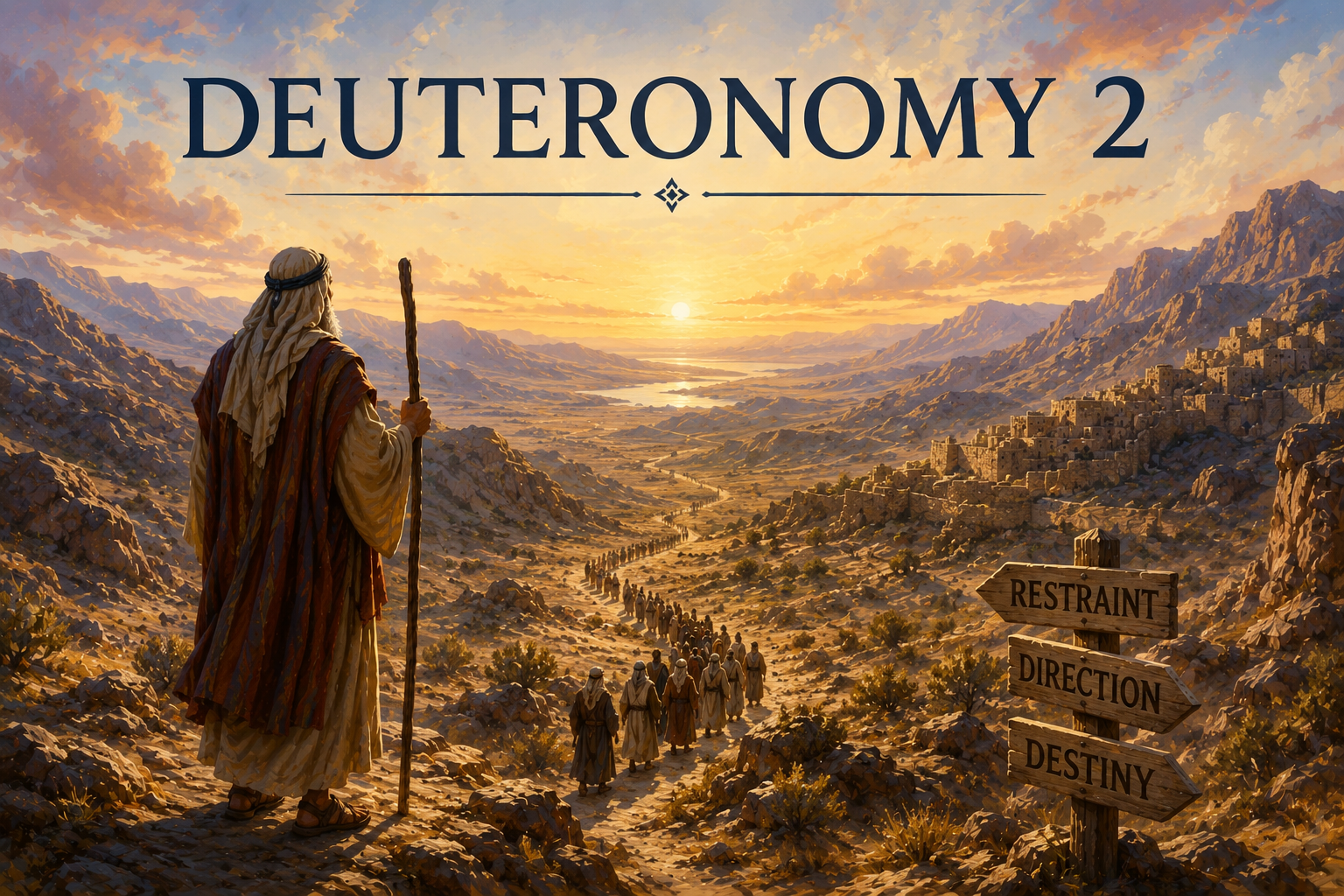
Deuteronomy 2 revolves around that idea.
The chapter continues Moses’ retelling of Israel’s wilderness journey, but the focus is no longer merely survival. The wandering generation is gone. A new generation is learning movement, restraint, timing, and discernment.
The Westminster Leningrad Codex opens with Israel circling Mount Seir for “many days.” The image is repetitive and exhausting. The nation has been moving physically for years without truly advancing.
Then comes the turning point:
“You have circled this mountain long enough. Turn northward.”
The problem was never only the wilderness. The previous generation carried fear so deeply that they could not move forward even when the future stood directly in front of them. Deuteronomy states plainly that thirty-eight years passed until that generation disappeared from the camp.
Sometimes, the delay is not caused by external resistance.
Sometimes the people themselves are not ready yet.
Then the chapter becomes surprisingly restrained.
As Israel approaches Edom, Moab, and Ammon, they are repeatedly told:
Do not fight them.
Do not seize their land.
Do not provoke conflict.
That matters because Israel is finally gaining momentum again. Yet God deliberately limits their expansion.
The text explains why:
“I have given it… as a possession.”
Those lands already belonged to others within the larger structure of history and inheritance. Deuteronomy 2 dismantles the assumption that every visible opportunity is automatically yours to take.
Not every open territory is permission.
Not every obstacle is an enemy.
Israel is instructed to purchase food and water instead of taking resources by force. The nation that once suffered under oppression must now learn how to handle emerging power responsibly.
Then Moses recalls older people who once occupied these regions:
- the Emim
- the Rephaim
- the Zamzummim
These groups are described as powerful and intimidating, similar to the giants that terrified the earlier generation. But the surrounding nations had already defeated them.
That detail quietly reframes Israel’s earlier collapse.
The giants were never the true problem.
Fear was.
Deuteronomy 2 keeps exposing how distorted perception delayed an entire generation. The obstacle looked larger because the people themselves had already collapsed internally.
Then the chapter shifts dramatically when Israel encounters Sihon, the king of Heshbon.
This time the instruction changes:
Now engage.
Now advance.
Now fight.
That contrast becomes the heart of the chapter.
Earlier, Israel refused to fight when told to move forward.
Later, they fought when told not to.
Now they are finally learning alignment with timing itself.
Some battles require courage.
Others require restraint.
Wisdom is knowing the difference.
The defeat of Sihon marks the first major victory of the new generation. Movement finally begins replacing stagnation. But Moses still frames the victory carefully. The outcome is never presented as mere military superiority. The text repeatedly emphasizes a larger unfolding process beyond human strategy alone.
Deuteronomy 2 is ultimately about learning disciplined movement after failure.
The previous generation believed every obstacle meant destruction.
This generation must learn discernment instead.
Not every conflict deserves escalation.
Not every delay means abandonment.
Not every boundary is an attack against your future.
Sometimes maturity looks less like conquest and more like knowing when to pass through quietly and continue moving forward.