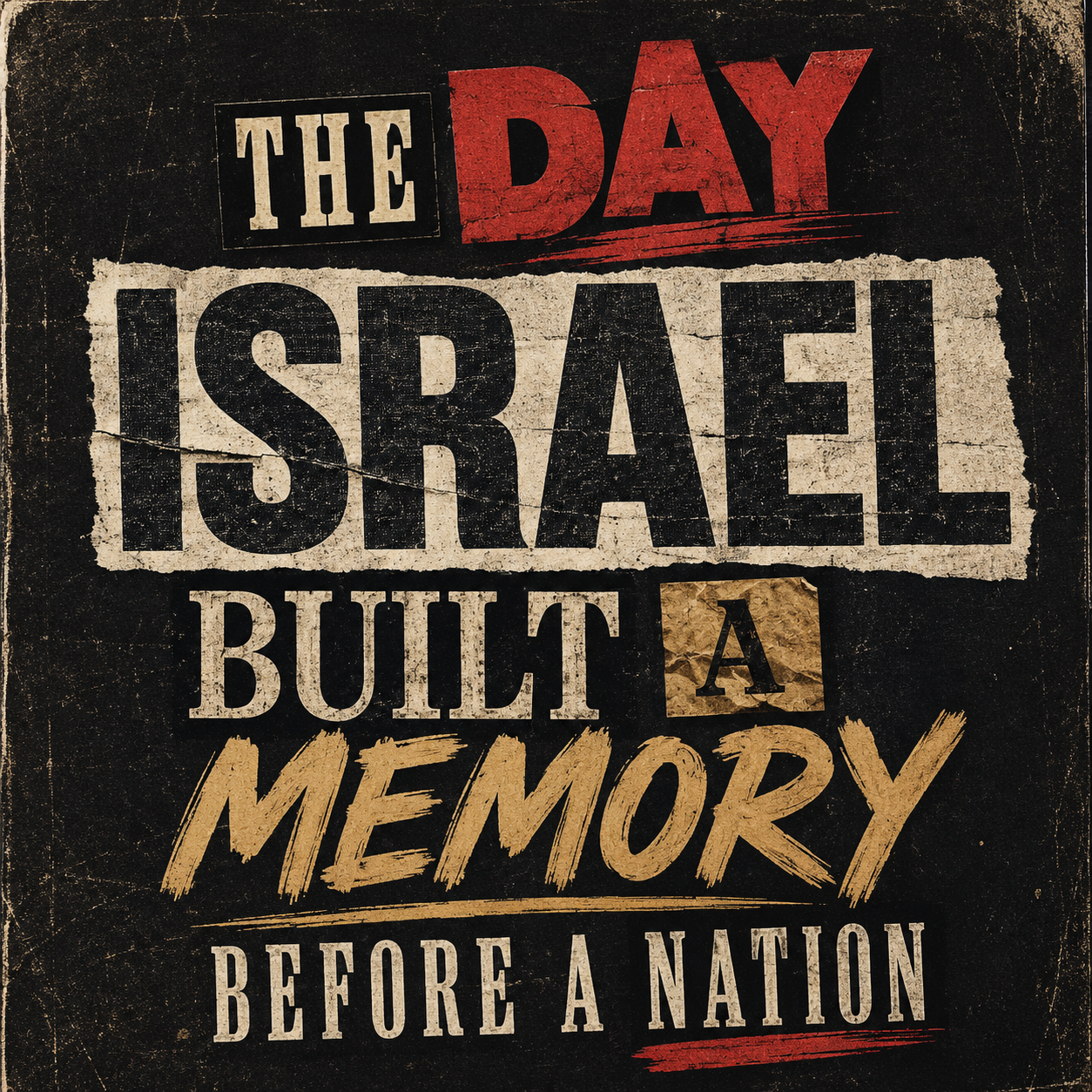
Civilizations don’t usually die from invasion first.
They die from collective amnesia.
Joshua 4 is basically an ancient version of:
“Put the receipts where your kids can see them.”
Israel crosses the Jordan, survives the impossible, and God immediately tells them to stop… and stack stones.
Not because stones are magical.
Because memory is fragile.
That’s the part modern societies underestimate.
Every stable civilization builds memorial systems:
monuments,
holidays,
rituals,
constitutions,
shared stories,
national myths.
Why?
Because people forget faster than institutions can survive.
The Hebrew text keeps repeating עָבַר (avar) — “to cross over.”
The chapter is obsessed with transition.
But the real danger comes after the crossing.
That pattern shows up everywhere now.
Countries argue over statues.
Families stop passing down traditions.
Institutions rewrite themselves every election cycle.
Entire generations inherit outrage with no historical memory attached to it.
Then everyone wonders why social trust collapses.
Rome had this problem late in the Republic.
So did post-revolution France.
So did nearly every declining empire that lost shared identity faster than it lost military power.
Joshua 4 understood something modern culture keeps relearning the hard way:
If you stop transmitting memory,
you eventually stop transmitting meaning.
And once meaning disappears, fragmentation arrives right on schedule.