Numbers begin with a census because chaos cannot carry a nation very far.
That is the first surprise of the book.
After the miracles of Exodus and the sacred systems of Leviticus, Numbers opens with lists, tribes, totals, and organization. At first glance, it feels administrative. But underneath the counting is a deeper transition taking place:
Former slaves are being reorganized into functioning people.
The Westminster Leningrad Codex places this moment in the wilderness of Sinai, one year after leaving Egypt. Israel is no longer escaping. Now it must learn how to exist.
God commands Moses to take a census using the Hebrew phrase:
“Seʾû ʾet-rōsh” (שְׂאוּ אֶת־רֹאשׁ)
Literally:
“Lift the head.”
The language is more personal than modern census-taking. The people are not treated as statistics. Each tribe, family, and household is identified intentionally. The act of counting becomes recognition.
Every name matters because identity is being rebuilt.
The census focuses specifically on males twenty years old and upward who can go to war. That detail reveals something important immediately:
The wilderness is not the destination.
Israel is being prepared for movement, conflict, and settlement. The nation is transitioning from survival mode into organized purpose.
Then the chapter begins repeating tribal names, leaders, and numbers with almost mechanical precision.
That repetition is deliberate.
Structure is being established where slavery once erased individuality. In Egypt, they were oppressed laborers. In Numbers, they become ordered tribes with leadership, responsibility, and a defined place within the larger whole.
One tribe, however, is handled differently.
Levi is excluded from the military census.
The Levites are assigned to the tabernacle instead. While the other tribes organize around warfare and national movement, Levi organizes around sacred presence. Their role is to guard and maintain the tabernacle so that disorder does not break out within the camp.
That detail becomes central to the chapter.
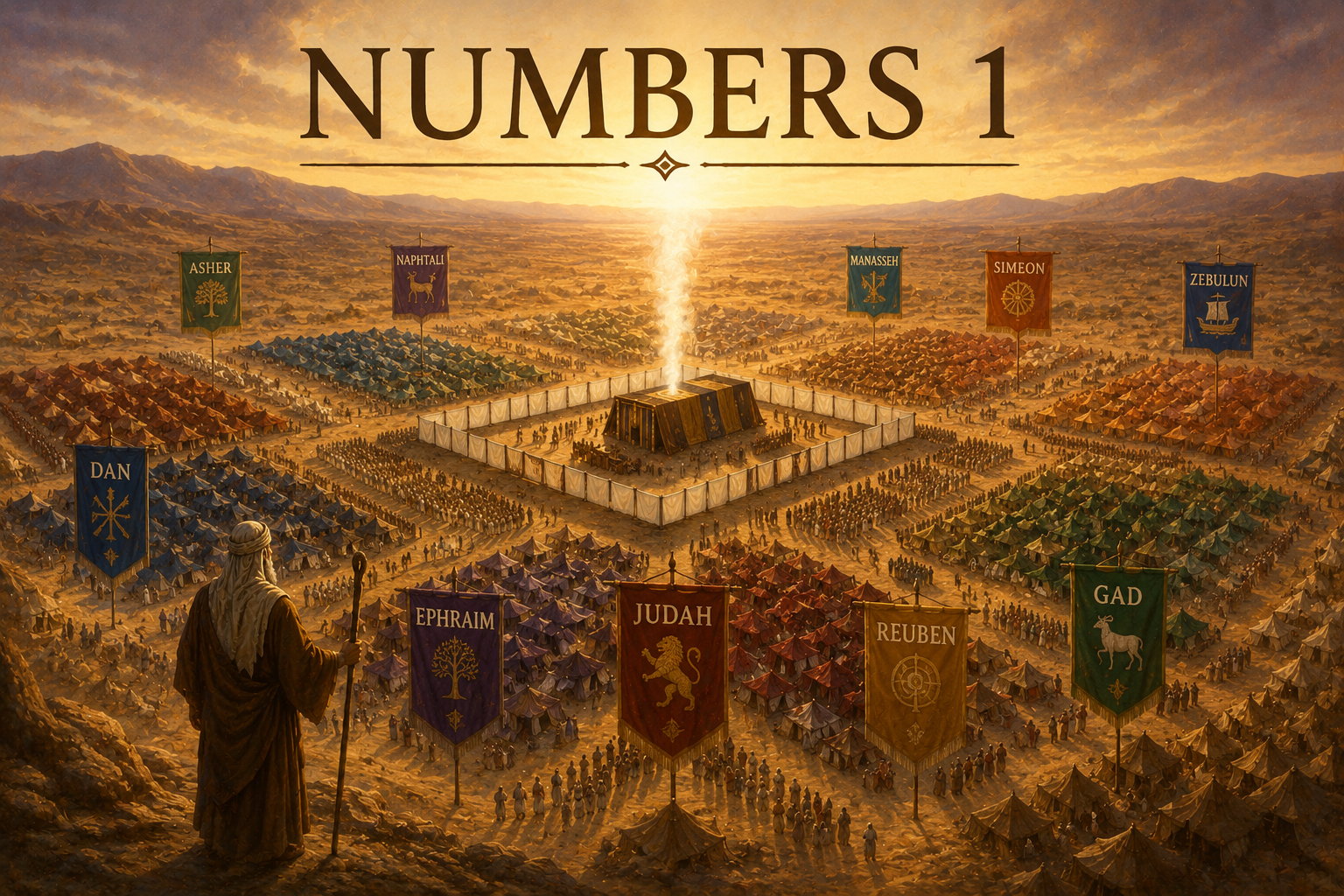
The tabernacle sits at the center of Israel’s camp.
Not the army.
Not political leadership.
Not wealth.
The sacred presence occupies the middle, and everything else arranges itself around it.
The image is intentional. Numbers present a society ordered around something higher than power alone. The physical structure of the camp reflects the spiritual structure that the text is trying to establish.
And this is where Numbers 1 becomes more relevant than most people realize.
The chapter is not really about counting people.
It is about what happens after liberation.
Escaping oppression is one challenge.
Building a stable identity afterward is another.
Without structure, purpose dissolves.
Without responsibility, movement collapses.
Without a center, communities fragment.
Numbers 1 shows a person suspended between rescue and arrival. Egypt is behind them. The promised land is ahead. But before they can move forward, the nation itself has to be organized internally.
Names are recorded.
Responsibilities are assigned.
The camp is arranged.
The people are preparing to move.
The wilderness becomes the place where identity is rebuilt before destiny is reached.