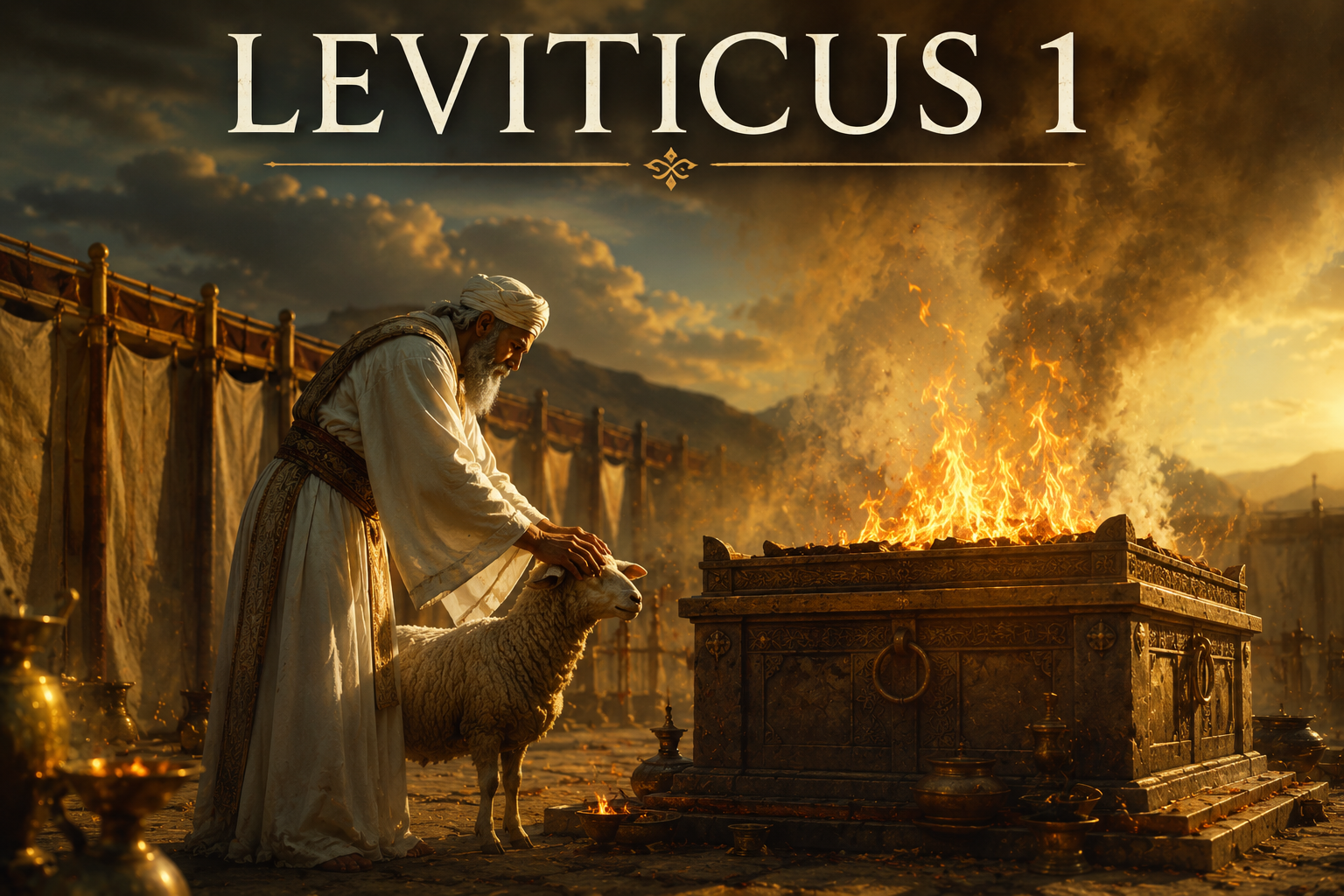
One of the biggest misconceptions about Leviticus is that every offering was about sin.
Leviticus 2 proves otherwise.
No animals die in this chapter. No blood is poured out. Instead, the offering is made from flour, oil, incense, salt, and baked bread. The focus shifts from guilt to recognition. From atonement to acknowledgment.
The Westminster Leningrad Codex calls this offering the minḥāh (מִנְחָה). The word is often translated “grain offering,” but its broader Hebrew meaning is gift, tribute, or presentation offered before a king. That changes the tone immediately.
This is not humanity trying to survive judgment.
It is humanity recognizing dependence.
The materials themselves are ordinary:
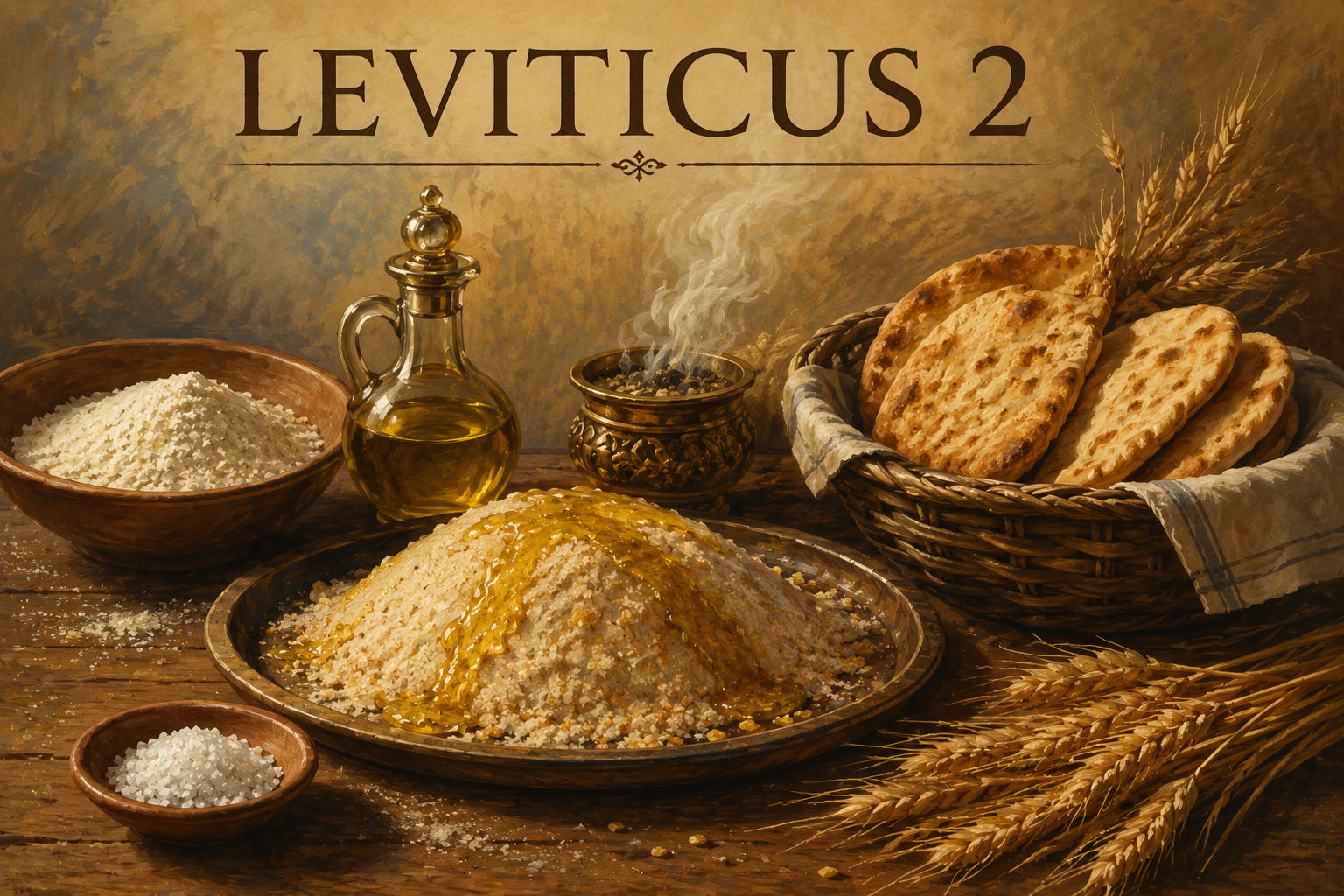
- fine flour
- oil
- frankincense
Nothing here feels dramatic. That is the point.
Leviticus 2 pulls everyday human labor into sacred space. Grain must be cultivated, harvested, ground, and prepared. Bread does not appear by accident. The offering represents work, provision, effort, and survival itself.
Then oil is added. Throughout the Hebrew Bible, oil becomes associated with consecration, richness, and setting something apart for a purpose. Frankincense adds fragrance, transforming the offering from mere food into something honoring and intentional.
Part of the offering is burned on the altar as a memorial portion.
Part remains for the priests.
Worship and provision become connected. The system sustains both relationship and community.
Then Leviticus does something surprisingly detailed. It spends time describing cooking methods:
- baked in an oven
- cooked on a griddle
- prepared in a pan
At first, it sounds repetitive. But the repetition reveals the deeper idea:
ordinary life is now part of the sacred structure.
Cooking.
Preparing meals.
Working the ground.
Making bread.
These things are no longer spiritually disconnected.
Then the chapter suddenly introduces restrictions:
No leaven.
No honey.
Leaven represented fermentation and spreading influence. Honey, though valuable, breaks down under heat. The altar could not receive elements associated with corruption, instability, or decay.
But one ingredient becomes mandatory:
Salt.
“With all your offerings, you shall offer salt.”
Salt preserves. Salt prevents decay. The text calls it “the salt of the covenant,” connecting preservation directly to the relationship itself. What is sacred is meant to endure, not rot from within.
The chapter closes with firstfruits offerings, the earliest produce of the harvest season. Before consumption, before profit, before accumulation, the first portion is returned.
That act matters.
It pushes directly against the illusion of self-sufficiency.
Leviticus 2 presents a worldview where even ordinary provision is not viewed as self-generated. Human labor matters, but the system assumes life itself still depends on something deeper than human effort alone.
That is why the offering is simple.
Flour.
Oil.
Salt.
Bread.
The chapter quietly argues that worship is not confined to moments of crisis. Sometimes it looks like recognizing the source behind the things people have started taking for granted.