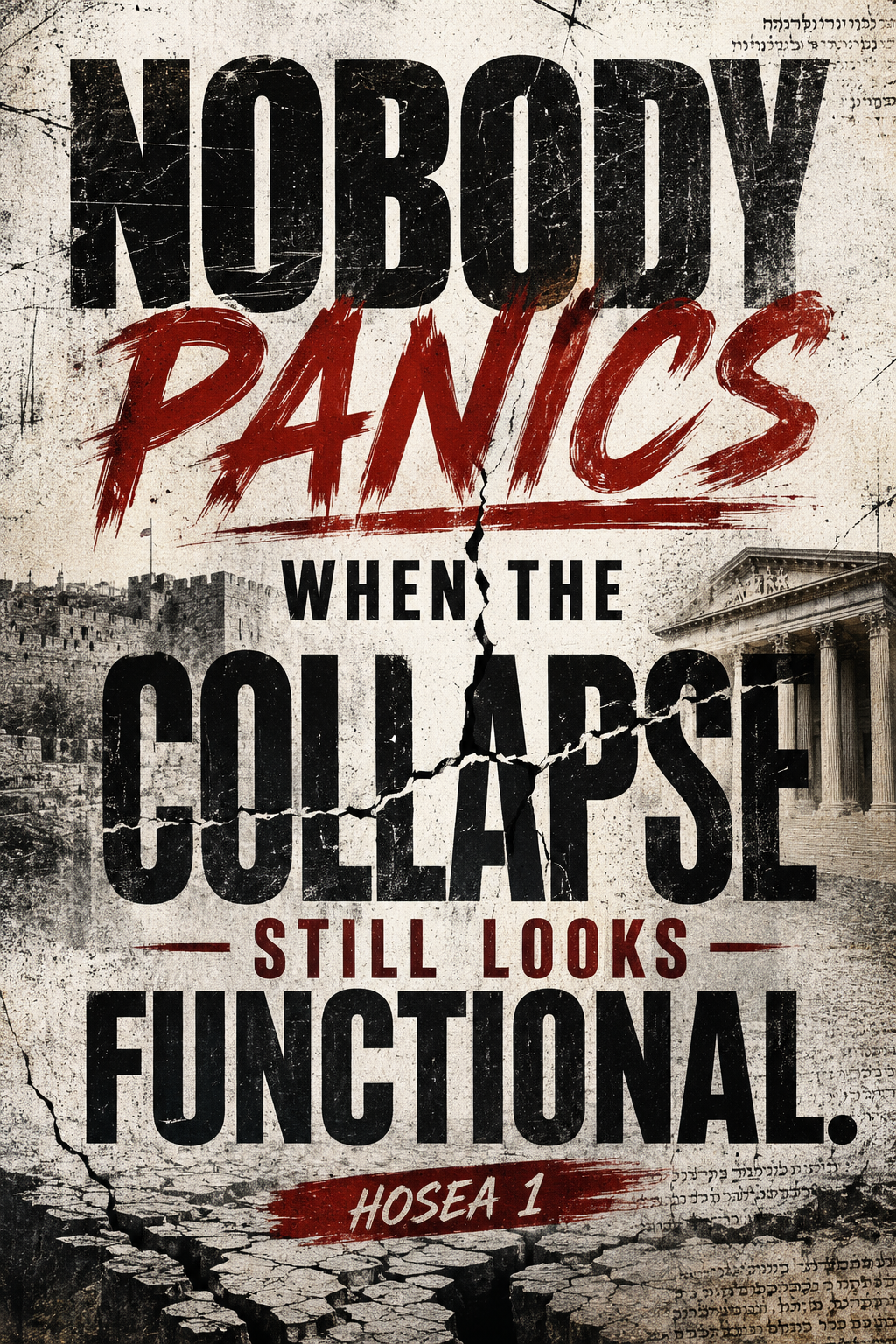
Nobody panics when the collapse still looks functional.
That is the atmosphere surrounding Hosea 1.
The nation was still operating.
Markets moved.
Religious rituals continued.
Leadership structures remained intact.
From the outside, Israel looked stable enough to survive.
But Hosea delivers one of the harshest messages in the Hebrew Bible during that exact period. Not during the invasion. Not during famine. During apparent success.
That detail matters.
The Westminster Leningrad Codex presents Hosea’s marriage as more than a private tragedy. It becomes a public diagnostic tool. His family turns into a visible warning about a society losing internal loyalty while preserving external identity.
The Hebrew phrase “אֵשֶׁת זְנוּנִים” (eshet zenunim) carries the idea of repeated unfaithfulness, wandering allegiance, and covenant instability. The problem is not one mistake. It is normalization.
That pattern shows up repeatedly throughout history.
Systems rarely collapse the moment corruption begins.
They usually survive long enough for people to mistake endurance for health.
You can see the same tension now across governments, media institutions, corporations, churches, and even personal relationships. Public trust keeps falling across nearly every major institution in the United States, according to long-running polling from Gallup and Pew. Yet most systems continue functioning just well enough to maintain the appearance of stability.
That is what makes Hosea feel modern.
The danger is not always open rebellion.
Sometimes it is slow fragmentation hidden beneath routine.
The children’s names in Hosea 1 read almost like escalating national headlines.
Jezreel becomes associated with political bloodshed and unstable power.
Lo-Ruhamah signals compassion being withdrawn.
Lo-Ammi means: “Not my people.”
Each name marks another stage of relational breakdown.
The deeper warning underneath the chapter is uncomfortable because it cuts across politics, religion, and culture at the same time:
A society can continue using the language of unity long after trust has already collapsed underneath it.
That is why institutions become obsessed with narrative control during periods of instability. Once populations stop trusting the relationship itself, messaging alone stops working.
Hosea understood something many modern systems still struggle to admit:
People can sense misalignment long before leaders acknowledge it publicly.
And once enough people feel that fracture at the same time, the crisis is no longer private.
It becomes national.